
Signposts
Cloud, spring, Bristol Channel, freshwater dune pools, Skirrid and Kenfig, 08/04/26

Finn and I head out early, making our plans as we go; we have coast and hill in mind, and opt first for Ysgyryd Fawr, a ridge of red sandstone at the edge of the Black Mountains, rising from a plain of fields.
The Skirrid is a sister of Sugarloaf, Y Fal, Abergavenny’s guardian mountain. We’d wondered about a bigger hill, deeper into the Bannau, but this is more than glorious enough - enough of a climb for today, taking the back route skirting tangled woodland, haloed in sun, the song of chiffchaffs and blackbirds, wood anemones and celandine and bluebells. At the saddle close to the ancient site of St Michael’s chapel, out of the blue a cuckoo, sounding out of the trees like a Buddhist bell. I stop, returning to the breath without trying. Tilt my ear to the sky and wait for her, a full sonorous chime, through the flurry of soprano chirps.
I notice my surprise. I have a capacity to limit my expectations, and here is the world, again, breaking through them and inundating them with unutterable wonder - small things, but vast things. Not just cuckoo, but buds, and clouds of flies hovering at head height, and the sheer wild colour of a bluebell, and the pine cone’s symmetry, all this in communion. Even in the small places - as Kafka said, the world rolls in ecstasy at our feet. Trees drip in lichen, an ancient mother hawthorn’s body is breaking into fibrous, woody pieces - her trunk all black knots and twists, yet rippling with new leaves; her saplings growing in her shade; rills of peat water trickling from hidden springs.
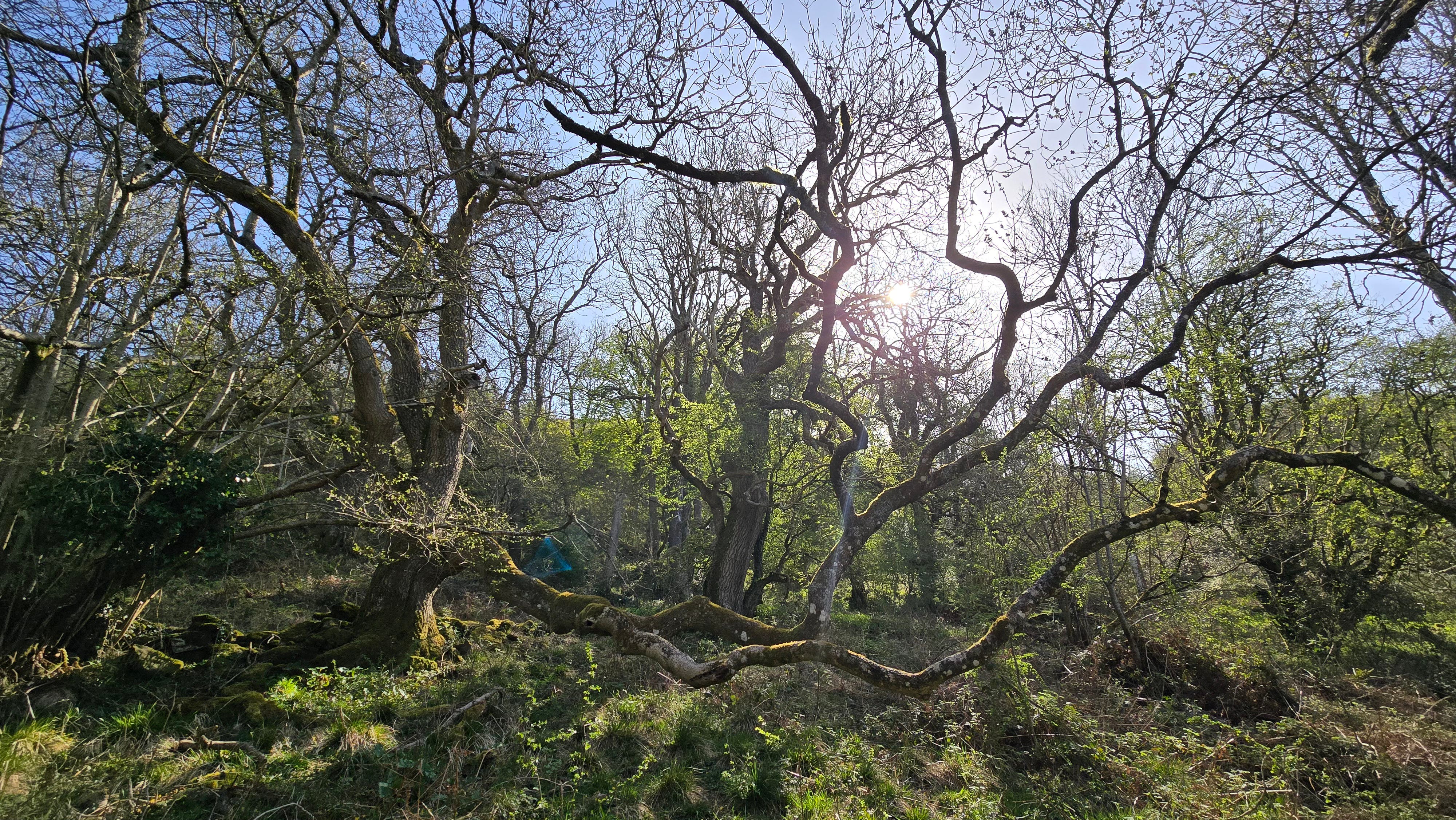
The climb from the wood’s edge up to the cragged summit is hard work, feet stumbling for footholds kicked into steep grass and fissures by previous scramblers. We crash for a few minutes under the shadow of a dead tree. Cuckoo’s up here too, singing over our breakfast, cornflakes in tupperware. And onto the summit, the ridge walk with the world at our feet - the Malverns, the high Bannau, rolling Herefordshire and Shropshire hills. We’re not well attuned enough to tell what’s what, so we guess instead. A distant fire somewhere close to Pen Y Fan is burning, a huge pillar of smoke on the horizon, spreading out on the wind; a knot in the stomach, the fragility of things, even standing on rock as old as this. Sharp tumbling paths down the most direct route up from the valley, busier with humans, lots of them breathing heavily, some kids skipping up, some feeling cheated by false summits and dogged parents doing their best to reinflate their spirits. Down in the woods, a woodpecker battering its beak in the high branches as if it’s nothing, echoing in my body. We finish the walk toes crumpled in our boots, legs shaking, comfort exchanged for the shuddering, transcendence of being filled up with light and panting air and exquisite light and trudging and the constant unfolding of surprise, every sense awake. We fall into the car, to sandwiches and water and crisps, like sheep at a trough. The morning’s only just over.We drive the Head of the Valleys, bleak and wild and drop down the Vale of Neath, as far as the profane sprawl of Port Talbot’s steelworks, to Kenfig, a broad nature reserve of dune habitat and freshwater lakes between Bridgend and the Bristol Channel.
It is a long mile walk through protected dunes to the coast - perhaps this is the reason there are only twenty or so people on a two mile beach at 3pm on a warm, sunny day in the Easter holidays - everyone else is round the corner at Porthcawl, parking by the beach, amusements and shops and fish and chips. We pass them later - hundreds, thousands of people, crowding the seafront eateries, town sands.
Kenfig instead is hidden, clattering with drifting drunk bumblebees, engulfed in places by standing water, between dunes swathed in plants wiry, spined, tenacious communities of green, faces to the salt wind and stands of stunted, low growing, contorted trees. We backtrack a couple of times when the path is swallowed up in marsh, water hiding roots and miniature quivering forests of subaquatic plants, and pick our way through the dune paths on to higher ground, where we’re above the pools reflecting the sky, and get a better view of how far we’ve still to walk on legs already tired from the hills. Skirrid means shattered. Yes to that. Strips of water pool between the dunes, played by light wind into shimmering ripples, a silent drumskin, water feeling its way through the land. Even the dunebound grasses are only given life by their resourceful seeking and the welling of water.
We meet the sea. The far edges of our view are blurred by haze - the north coast of Somerset across the wide water faded almost out of sight, and next to us, the Welsh coast towards Swansea and Mumbles and beyond, the Gower Peninsula, towering Port Talbot steelworks like ghost ships hoving from mist. Before us the wide low-tide wet sand beach like glass, reflecting sun, and sea-edge breaking in waves that seem small but up close are still stiff enough to pitch you over if you forget to brace.
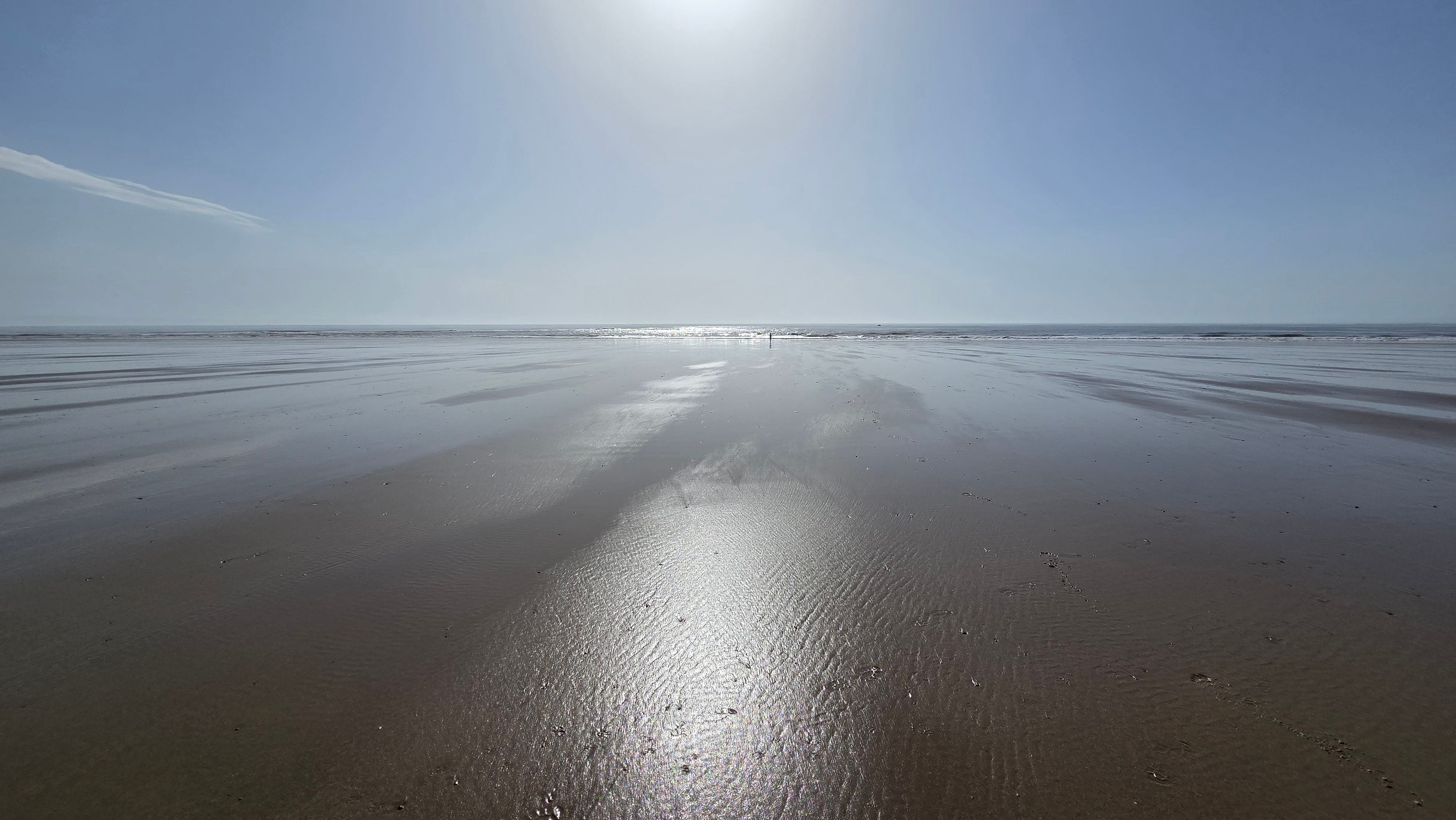
We balance bags on a dry patch of sand out in the wet plain, and introduce our bodies tentatively to the water, still 9 degrees cold after the winter. It takes a while. Not just the edge of single figure temperatures, but the breath of the mighty sea pushing and pulsing, clear and unfettered - and dangerous, even under the spring sun. A few moments fully in. And then to dry, laid out near the sea-pounded pebbles, senses blurring in the warm sun, dissolving between land, sea and sky; occasionally roused by a dog sniffing at bags, a roaring trail bike wheelying downbeach. Two riders on horses at full tilt, followed minutes later by another dog, short on legs but as full of abandon as the horses. A dandelion clock, radiant as the sun, blown to the wind. And beginning the walk back.
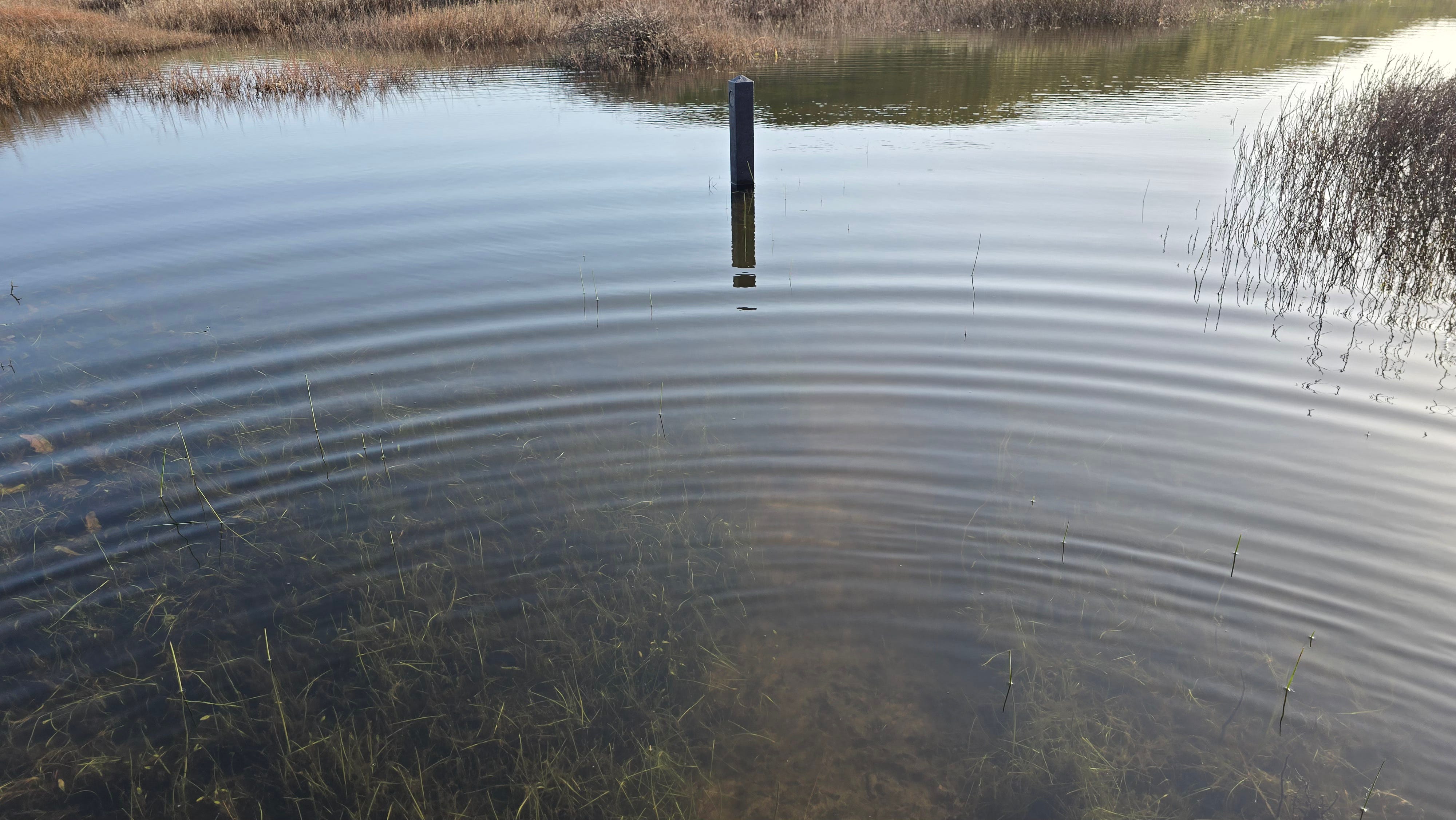
A waymarker catches my eye, a dark wooden post, half underwater, the path it once marked sundered. It is a black, oddly geometric obelisk suspended against the reflected blue of a dune pool, as if Richard Long has laid it in the landscape on a fifty mile walk. It first makes me smile - aquatic habitats claiming human pathways back for themselves; that even our best efforts are subject to rhythms and relationships beyond our control. Nature will gently - sometimes violently - reintroduce equilibrium. Other questions float upward - about the folly of our projects - the world writhes under our boots because we cannot accept our impermanence. What does it say about our pathways - do we wade? Do we shape ourselves to this new landscape? What guidance can a signpost give when the path it points to is swallowed? What caused it? Seasonal shifts? Climatic shifts? Somehow a beautiful thing - odd, unsettling, humorous…and beautiful.
The path to the edge of this pool, which the post used to describe, no longer has human footprints leading to it - only the clawmarks of eager dogs. I walk down to the lapping water. I’ve been walking the return journey barefoot. There’s an ecosystem of aquatic fauna already established, the water with a rusty, peaty tinge of organic life. I wade in a little, warmer than the sea, and watch spellbound as the later-afternoon sun catches the concentric ripples from my arrival radiating out into the pool. When they meet the waymarker, it reciprocates with wavelets pulsing back towards me, as if to say hello, and thanks for stopping.
We hunt for chips. The M4 feels strangely alienating, despite being the quickest route home. The body continues to hum with bees, cloud, waves, cuckoo, woodpecker; land and ocean.
I am still thinking about what it might mean long after.